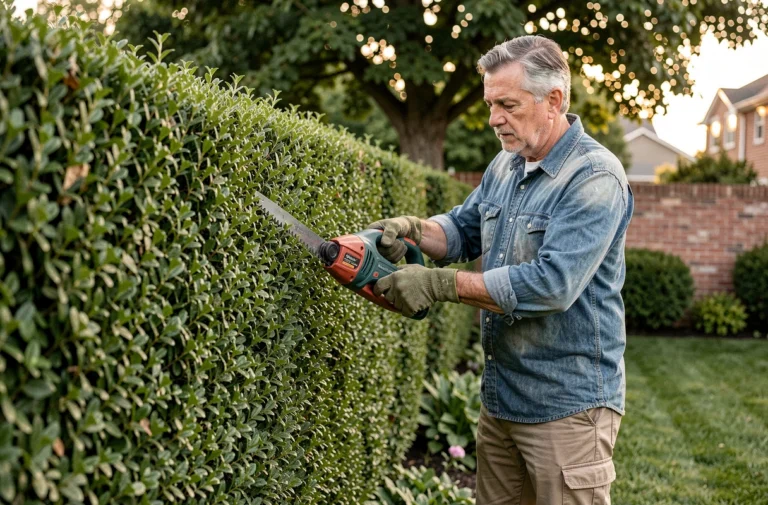
A baby rubbing their eyes after twenty minutes of play on a play mat sends a clear signal: the stimulation has exceeded their capacity to absorb it. Starting from these micro-signals, rather than a theoretical activity program, changes the way we support the awakening and well-being of the baby on a daily basis. The development of the little one relies less on the quantity of toys offered than on the quality of attention given to their reactions.
Signs of fatigue and overstimulation in infants
We often talk about awakening activities without specifying when to stop. A baby a few weeks old has only very short attention spans. Exceeding this threshold produces the opposite effect of what is sought: crying, restlessness, difficulty falling asleep.
Recognizing saturation signals is the first skill to acquire. A gaze that turns away, clenched fists, repeated yawning, or an arched back indicate that the wake time is reaching its limit. Cutting off stimulation at the first signs of fatigue prevents the frustration-crying cycle that complicates falling asleep later.
Concrete guidelines on infant rhythms and appropriate wake durations for each age group can be found on bebebonheur.fr, which helps calibrate playtime.
Baby sleep and prevention of sudden infant death syndrome
Sleep occupies most of a newborn’s day, and the way we arrange the sleeping space has direct consequences on their safety. The HAS (Haute Autorité de santé) has published recommendations on the prevention of sudden infant death syndrome. This aspect is often overlooked in articles focused on awakening, even though it conditions the overall well-being of the child.
Concrete points of vigilance to remember:
- Place the baby on their back, on a firm and flat mattress, without a pillow, duvet, bumper, or stuffed animal in the crib
- Maintain the room temperature around a moderate value and dress the child in a sleep sack appropriate for the season rather than a blanket
- Prefer room-sharing (the baby’s crib in the parents’ room) without bed-sharing during the first months
A stripped-down sleeping space protects better than an overloaded cozy nest. This rule sometimes contradicts the reassuring image of a cushioned cocoon, but the prevention data is clear on this point.
Sensorial awakening activities without specialized equipment
Buying a collection of Montessori-labeled awakening toys is not mandatory. Everyday objects offer a variety of textures, sounds, and weights that commercial toys struggle to replicate.
A wooden spoon tapped against a pot engages hearing and hand-eye coordination. A lightweight fabric placed on the baby’s feet (under supervision) triggers a pedaling reflex and tactile exploration. Varying textures – smooth, rough, cold, warm – nourishes sensory development without overwhelming the environment.
The role of free floor time in motor skills
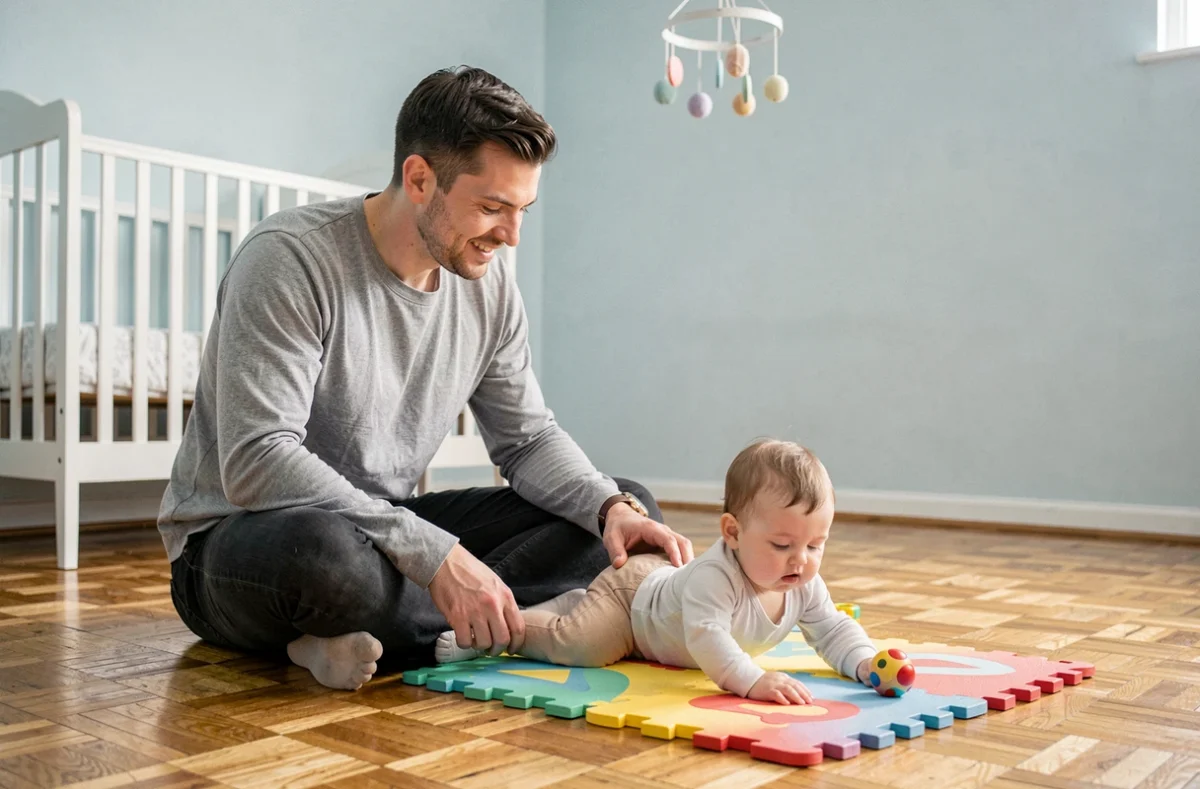
Placing the baby on a firm mat, flat on their back, without an arch or mobile above them, remains one of the most effective gestures to encourage motor skills. We talk about free motor skills: allowing the child to experiment with their movements without physically guiding them or propping them in a position they haven’t reached on their own.
A baby who tries to roll over, fails, tries again, and eventually succeeds builds their coordination and confidence. Intervening too early deprives the child of a complete motor learning experience. Feedback varies on this point: some parents find it difficult not to help, but observing without intervening is part of the support.
Screens and young children: what current recommendations say
Institutional monitoring of children’s well-being is expanding to include screens, sleep, and sedentary behavior. Santé publique France now incorporates these parameters into its prevention work aimed at early childhood.
For parents, the operational guideline remains straightforward: no screens before the age recommended by health authorities. A screen captures the baby’s attention through movement and light, but this passive stimulation does not produce the neural connections generated by interaction with an adult or the manipulation of a real object.
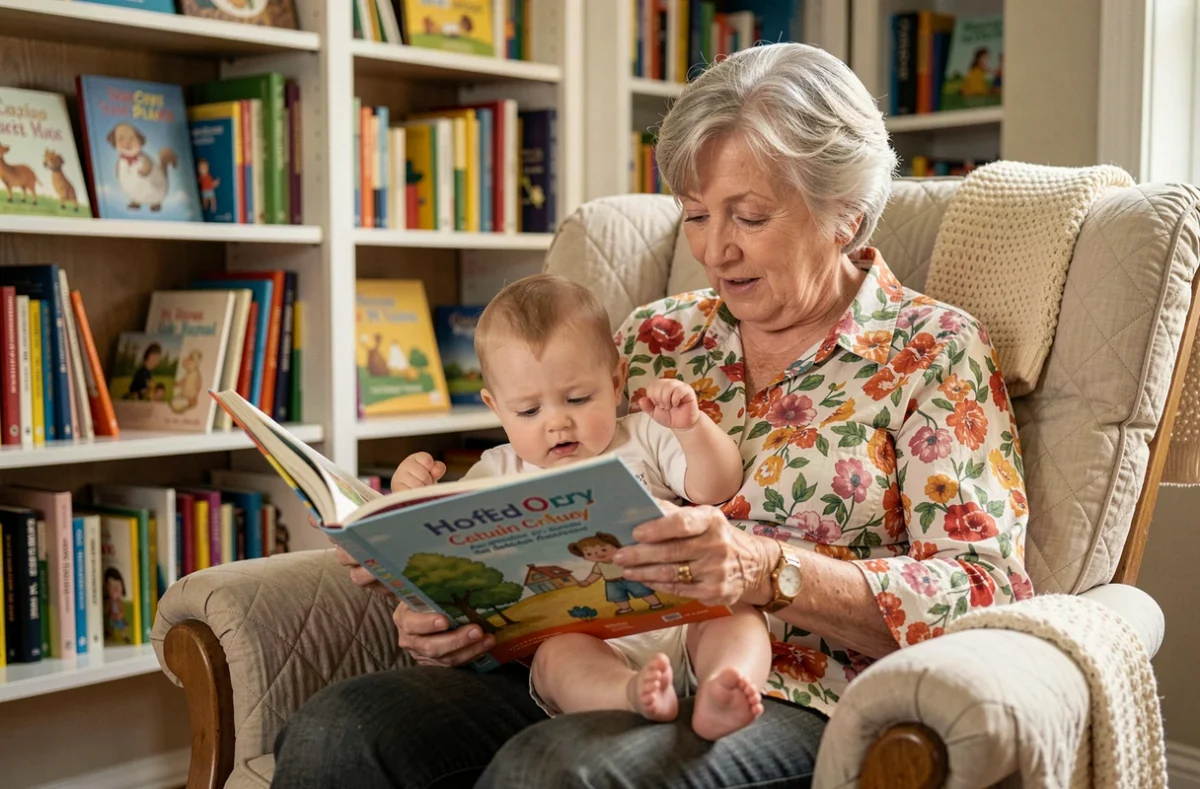
Replacing ten minutes of screen time with ten minutes of floor play, singing nursery rhymes, or simply silent face-to-face interaction provides more for the child’s development. Face-to-face interaction, by the way, remains the most powerful stimulation during the first months: looking at your baby, talking to them, responding to their coos.
Nutrition and awakening: check your sources
Nutrition advice for young children circulates abundantly online, with sometimes contradictory recommendations. Santé publique France is working on formulating and disseminating updated recommendations for several age groups, including toddlers.
Before following a food diversification schedule found on a blog, cross-check the information with the most recent official recommendations to avoid mistakes. The introduction of foods, their texture, their frequency: each parameter is subject to a medical consensus that is best consulted directly at the source.
The daily well-being of a baby ultimately depends on a few things: a safe sleeping space, wake times calibrated to their signals, free floor time to move, and regular human interactions. No need for sophisticated equipment or a structured program. Observe, respond, adjust – this is the most reliable foundation on which to build.