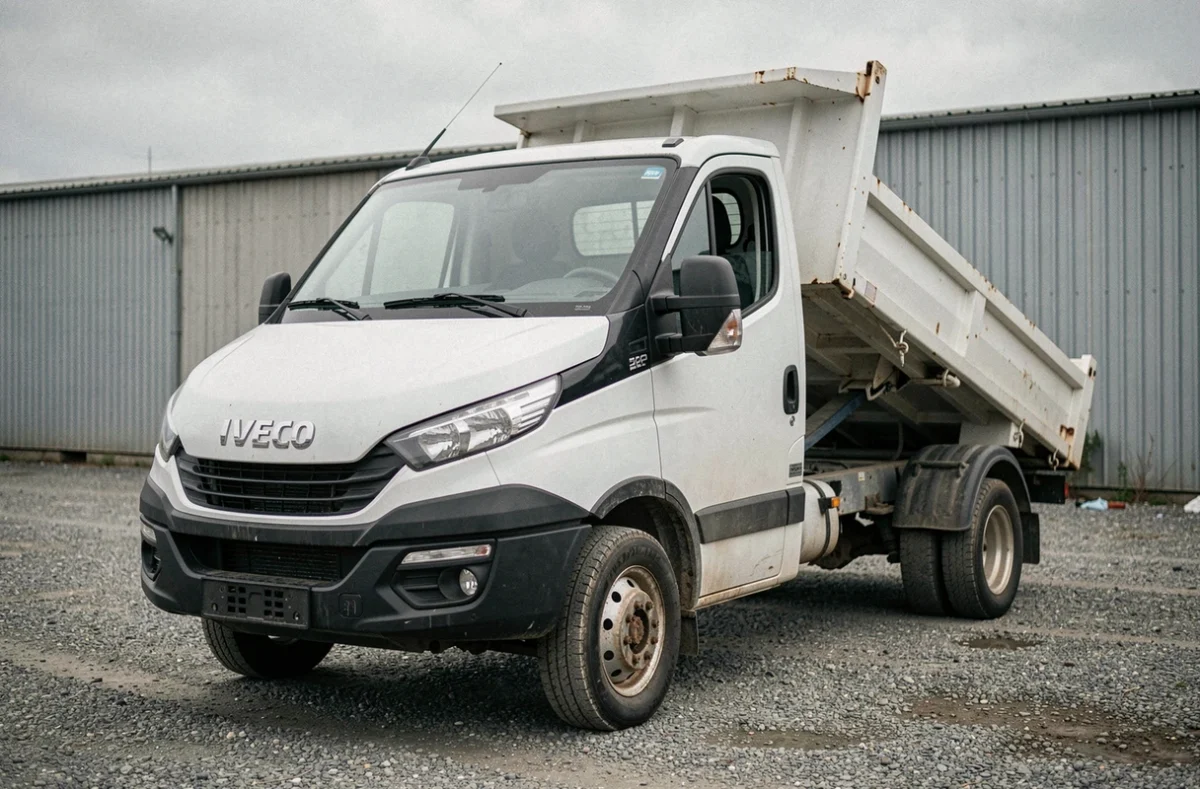
A used 3.5-tonne Iveco tipper truck can sell for a wide range of prices, sometimes varying threefold depending on the vehicle’s actual condition. The Daily, the most common base for this type of configuration, often racks up tens of thousands of tipping cycles before reaching the resale market. Knowing what to inspect, and in what order, can prevent an apparent bargain from turning into a money pit.
Tipper ram and lifting mechanism on a 3.5-tonne Iveco Daily
Competitors talk a lot about the engine and gearbox, but rarely about the component that sets a tipper truck apart from a standard chassis cab: the hydraulic tipping ram. On a used Daily tipper, this ram has endured repeated mechanical stress, often while carrying loads close to the permitted maximum.
During the inspection, operate the tipping mechanism with the bed empty and watch it rise. A ram in good condition lifts the bed smoothly, without jolts or cavitation noises from the hydraulic circuit. If the bed slowly sinks on its own once fully raised, the ram’s internal seal is leaking. Replacing the complete ram, including labour, is a significant expense that should factor into negotiations.
Also check the hydraulic hoses. Oil seepage around the fittings, or cracked or swollen outer sleeves, indicate advanced wear. Finding a used 3.5-tonne Iveco tipper truck with a regularly serviced hydraulic system is the first step in ruling out bad deals.
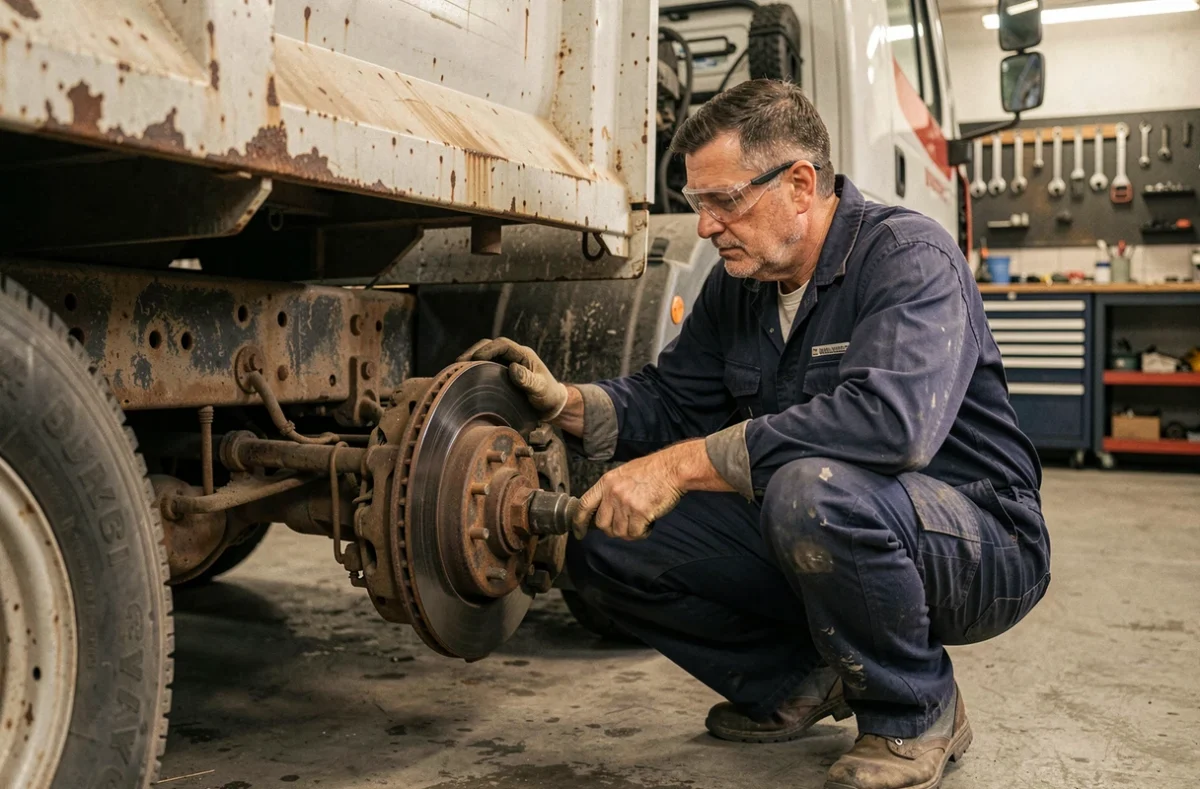
Condition of the chassis and steel tipper bed: corrosion and deformation
The chassis of a 3.5-tonne Daily is a ladder frame that supports the tipper bed. Tipper trucks often work in wet conditions (soil, wet rubble, road salt in winter), which accelerates corrosion compared with a standard panel van.
Get underneath the vehicle and inspect the chassis rails along their entire length. Surface rust can be treated, but deep corrosion, especially around the tipper bed mounting points, compromises the structural integrity of the whole assembly. Tap suspect areas lightly with a small hammer: sound steel rings, while corroded steel dents or sounds hollow.
Tipper bed floor and sides
The tipper bed floor takes the impact of loading. Check it from underneath: dents, creases or makeshift welds indicate heavy use. The sides should open and close without sticking. Seized hinges or missing pins point to poor maintenance.
A deformed tipper bed floor increases the risk of the load sticking during unloading, prompting the operator to overload the ram to compensate. The problem then compounds itself.
Mileage, gearbox and Euro emissions standard on a Daily tipper
The odometer tells only part of the story. A Daily tipper used for short trips around a worksite may show modest mileage, but its clutch and gearbox will have worked much harder than those of a road vehicle with the same reading.
Manual or automated gearbox
Iveco offers the Daily with a six-speed manual gearbox or an automated gearbox (Hi-Matic on newer versions). Manual gearboxes are more common on the used 3.5-tonne market. Test one from cold:
- Engage every gear, including reverse, with the engine running: a crunch or noticeable resistance in any gear points to worn synchronisers
- Check the clutch bite point: in third gear, accelerate firmly from low revs; if the engine revs rise without a corresponding increase in speed, the clutch disc is nearing the end of its life
- Check for play in the gearshift: excessive lever travel indicates wear in the linkage or selector joints
Euro emissions standard and access to low-emission zones
The engine’s Euro emissions standard determines the vehicle’s Crit’Air rating. For a commercial vehicle that needs to operate regularly in urban areas, this matters as much as its mechanical condition. Restrictions vary from one city to another: a Daily allowed in one city may be banned in another under local regulations.
Before buying, check the exact Crit’Air rating using the registration number (not just the model year) and consult the rules in the areas where the vehicle will be used. A mechanically sound Euro 4 Daily can lose much of its practical value if low-emission zones in your area are set to restrict access in the near future.
Documents and service history to request for a used tipper truck
Check the vehicle’s paperwork before you even go to see it. Always ask for the following documents:
- Original registration certificate, checking sections F.1 (maximum laden mass), F.2 (gross vehicle weight) and G.1 (unladen weight): these details confirm that the vehicle is a 3.5-tonne model and not a derated or modified version
- A valid report from the latest roadworthiness test, paying particular attention to any defects related to the lifting system if it was inspected
- A certificate of administrative status (no outstanding finance or restrictions), dated within the last fifteen days and available free online
- Service and repair invoices covering hydraulic oil, hose replacements, engine servicing and gearbox oil changes
The HistoVec history report lets you cross-check the number of owners, the date of first registration and any reported accidents. A Daily tipper that has changed hands several times in a short period warrants extra scrutiny.
Compare the VIN stamped on the chassis with the number on the registration certificate and the manufacturer’s plate. On a tipper truck, the manufacturer’s plate also specifies the tipper bed’s maximum payload, which is not always listed on the registration certificate.
Before signing, always compare the vehicle’s actual condition with the invoices provided. A blank service record for a high-mileage Daily is not a sign of reliability; it is a warning that maintenance may have been neglected.