Snail farming at home, or heliciculture, is attracting more and more enthusiasts drawn by the simplicity of this practice and its low environmental impact. This activity, which can be pursued for gastronomic or educational purposes, offers a fascinating insight into the life cycle of these mollusks. Snails, known for their delicate flesh prized in French and Mediterranean cuisine, require specific conditions of temperature, humidity, and food. Amateur heliculturists must therefore create a suitable habitat to ensure the growth and well-being of their little protégés. This domestic panorama of heliciculture reflects a growing interest in self-production and the discovery of living organisms.
The Fundamentals of Home Snail Farming
Heliciculture at home is rooted in the desire to master the life cycle of the snail, from its larval stage to reaching adult size. For the most commonly farmed species, such as the Petit gris, the Gros gris, and the Burgundy snail, knowledge of optimal conditions for humidity, temperature, and light is fundamental. These gastropods, known for their appeal on the plates of fine gourmets, are extremely sensitive to their environment, requiring meticulous attention.
At the heart of reproduction lies the uniqueness of snails: they are hermaphrodites. Fertilization requires a partner, after which the incubation phase begins. The eggs, laid with care, result in the hatching of baby snails, which will be placed in a nursery where conditions are suited for their fragile beginning of life. Amateur heliculturists observe with interest the growth of these mollusks, which will eventually become specimens ready for harvest or reproduction.
The hibernation phase is another crucial stage in the life of snails. The metabolic slowdown of these cold-blooded creatures during cold periods requires a suitable environment for their survival. Helliculturists must ensure the protection of their snails from predators and adverse weather conditions, ensuring the continuity of the species and the sustainability of their farming. Mastering the life cycles of snails is therefore a combination of know-how, observation, and patience.
Practical Tips for Daily Management of Your Snail Farm
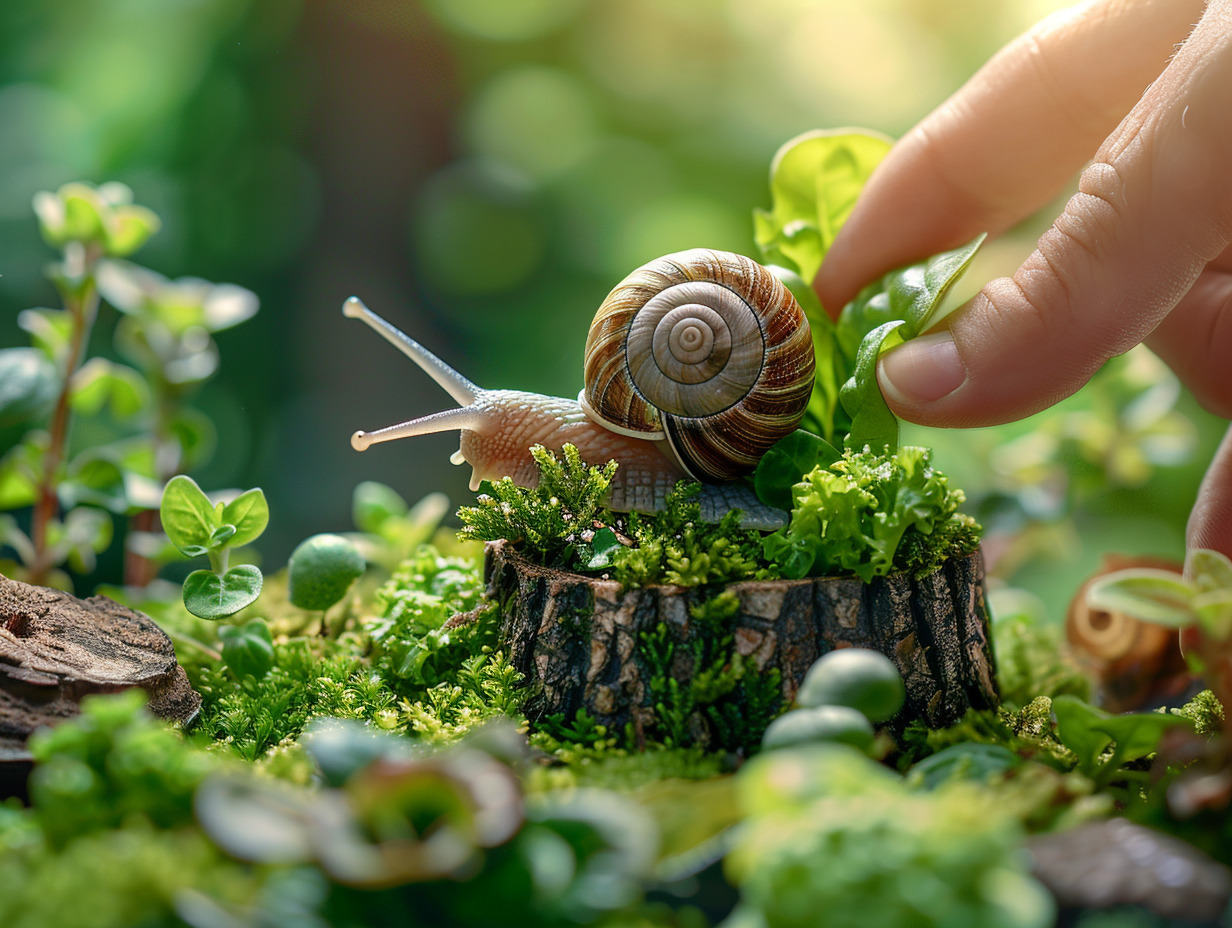
The habitat of your snails is a determining factor in their development and well-being. Whether it’s a plastic food box, a wooden crate, a terrarium, or even a greenhouse for more ambitious farms, ensure that the space is sufficient and secure. A good substrate, made up of potting soil and dead leaves, will promote a natural environment for the snails. Prevent drying out and overheating, the enemies of snails, by placing the habitat out of direct sunlight and ensuring adequate ventilation.
Regular mist spraying will guarantee ideal humidity, while managing the temperature will prevent lethargy or hyperactivity in the snails. Make sure that the closure system is effective to protect your residents from predators and to prevent any escape. A fine mesh or cover can also help secure the habitat while allowing necessary air circulation.
Nutrition is a pillar of snail farming. They require a varied and rich diet, including fruits, vegetables, and essential calcium sources for shell formation. Dry meals can supplement their diet, providing additional nutrients. Be attentive to the quantities offered to avoid overfeeding and maintain a clean and healthy habitat.