
The orange engine light on the Volkswagen Polo 5 corresponds to a warning managed by the engine control unit (ECU). This unit continuously monitors the data reported by the sensors of the powertrain and the pollution control system. When a value goes outside the programmed tolerance range, the ECU records an OBD-II fault code and lights up the warning on the dashboard.
Orange engine light or oil light on Polo 5: two distinct alerts
A common confusion is to equate the engine light (icon shaped like a stylized engine) with the oil light (icon shaped like an oil can). On the Polo 5, these two indicators signal very different issues.
The oil light alerts to a lubrication pressure or level fault. The orange engine light indicates a malfunction related to emissions, combustion, or a sensor in the engine management system. Confusing the two leads to incorrect diagnostics, for example, checking the oil level when the problem comes from a faulty lambda sensor.
To accurately identify the causes of the orange engine light on Polo 5, reading the fault code via an OBD-II port remains the reliable method. The icon alone is not enough to guide the repair.
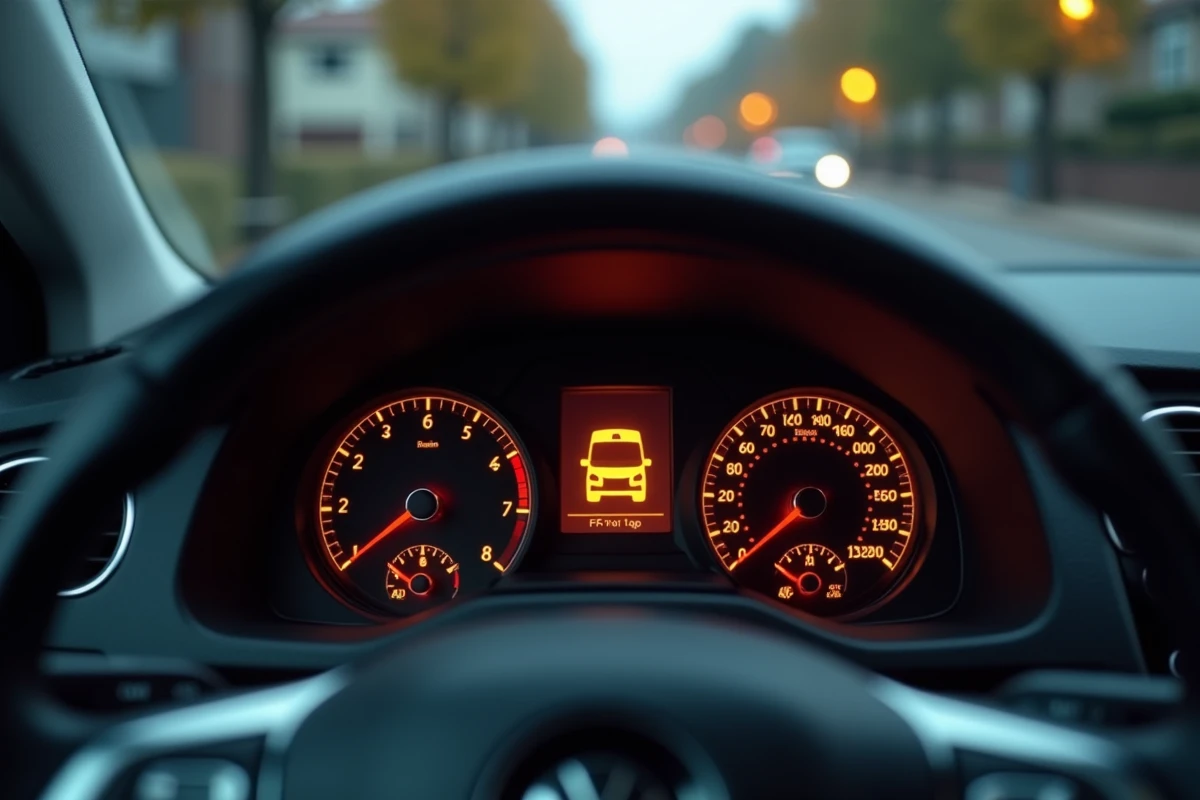
Common OBD-II fault codes on the Polo 5
The Polo 5 was produced between 2009 and 2017 (facelift included until 2021 for certain markets). Several components of this generation regularly trigger the orange engine light. OBD-II diagnostics allow linking the warning to a specific part or circuit.
Mass Air Flow Sensor (MAF)
The air flow meter measures the amount of air entering the engine. When it transmits inconsistent values, the ECU misadjusts the air/fuel mixture. The engine may then run unevenly at idle or lack power during acceleration. The associated fault code points directly to the MAF sensor circuit.
Lambda Sensor
The lambda sensor analyzes the oxygen content of the exhaust gases. An aging or clogged sensor skews the mixture correction. The direct consequence is increased fuel consumption and a compromised technical inspection due to excessive emissions.
EGR System
The EGR valve recirculates some exhaust gases back into the intake to reduce nitrogen oxides. On the diesel engines of the Polo 5, this valve clogs over time. A stuck EGR valve triggers the engine light and activates limp mode, limiting available power.
- The fault code related to the MAF suggests cleaning or replacing the air flow meter.
- A code pointing to the lambda sensor implies checking its condition and the quality of the fuel used.
- An EGR fault often requires disassembly for cleaning, sometimes a complete valve replacement.
Steady or flashing engine light: the severity is different
A steady orange engine light indicates a recorded fault, but the vehicle can generally drive at moderate speed to a garage. The ECU has detected an anomaly that does not immediately endanger the engine.
A flashing engine light indicates an active and potentially destructive problem, often repeated combustion misfires. Untreated combustion misfires can damage the catalyst, a component whose replacement costs significantly more than the original fault. In this case, reducing speed and reaching a workshop promptly limits the damage.

Resetting the engine light without diagnosis: an underestimated risk
Several online tutorials explain how to erase the engine light with a low-end OBD reader or by disconnecting the battery. This manipulation does indeed turn off the warning. However, the mechanical or electronic problem remains intact.
Erasing a fault code without identifying and correcting the cause is akin to removing a symptom. The ECU will eventually turn the light back on, sometimes after several tens of kilometers during which the fault may have worsened.
Let’s take a concrete example: a code related to the lambda sensor is erased without replacing the sensor. The engine continues to run with a mixture that is too rich. The unburned fuel eventually overheats the catalyst. The cost of replacing the catalyst far exceeds that of a lambda sensor.
- Reading the fault code with an OBD-II tool before any reset allows understanding the origin of the light.
- Noting the code (format P0xxx) and researching it in the technical documentation of the Polo 5 provides initial guidance.
- If the code returns after erasure, the fault is confirmed and requires mechanical intervention.
The trap of the technical inspection
An engine light erased just before the technical inspection does not fool modern equipment. Inspection centers check the availability of OBD-II data. If the diagnostic monitors are not all “ready” (which requires several driving cycles after an erasure), the vehicle may be deferred for lack of data.
When to seek professional diagnosis on Polo 5
A consumer OBD-II reader displays the fault code but does not provide real-time data or the ECU’s history. A professional diagnosis with a manufacturer tool (like VCDS for the Volkswagen group) accesses the values of each sensor, the adaptations learned by the ECU, and sporadic faults stored.
This depth of analysis justifies consulting a workshop in several situations: a light that returns after erasure, limp mode activated, or the simultaneous presence of multiple fault codes. A multiple fault may indicate an upstream problem (wiring harness, faulty ground) rather than the failure of each sensor taken in isolation.
A complete diagnosis before any repair avoids unnecessarily replacing parts and directs spending towards the truly faulty component. On an aging Polo 5, this approach makes the difference between controlled maintenance and a cascade of costly replacements.